
The Human Factors of Formal Methods
#Introduction
This talk presents some of our efforts to address this paucity. We apply ideas from cognitive science, human-factors research, and education theory to improve the usability of formal methods. Along the way, we find misconceptions suffered by users, how technically appealing designs that experts may value may fail to help, and how our tools may even mislead users.
Shriram is the Vice President for Programming Languages at Brown University in Providence, RI, USA. He’s not, really, but that’s what it says on his business card. At heart, he's a person of ill-repute: a Schemer, Racketeer, and Pyreteer. He believes tropical fruit are superior to all other kinds. He is terrified of success, because he may be forced to buy a suit. On a more serious note, he's a professor at Brown who has created several influential systems (such as DrRacket, Margrave, Flapjax, and Lambda-JS) and written multiple widely-used books. He has won SIGPLAN's Robin Milner Young Researcher Award, SIGPLAN's Software Award (jointly), SIGSOFT's Influential Educator Award, SIGPLAN's Distinguished Educator Award (jointly), and other recognitions.
#What to compute
#Principle Model Finding
The central focus of computation often revolves around deriving principle model findings, encapsulating complex systems or phenomena into manageable representations. However, the mere creation of intricate mathematical models does not necessarily equate to effective communication with all members of society.
In one such instance, a diagram illustrating loops, non-binary searches, and prompting questions appeared mathematically sound and well-defined. Yet, despite its clarity to some, it proved perplexing and off-putting to many users. This discrepancy between mathematical elegance and user comprehension underscores a crucial point: the beauty of mathematics does not inherently translate to accessibility or utility for all users.
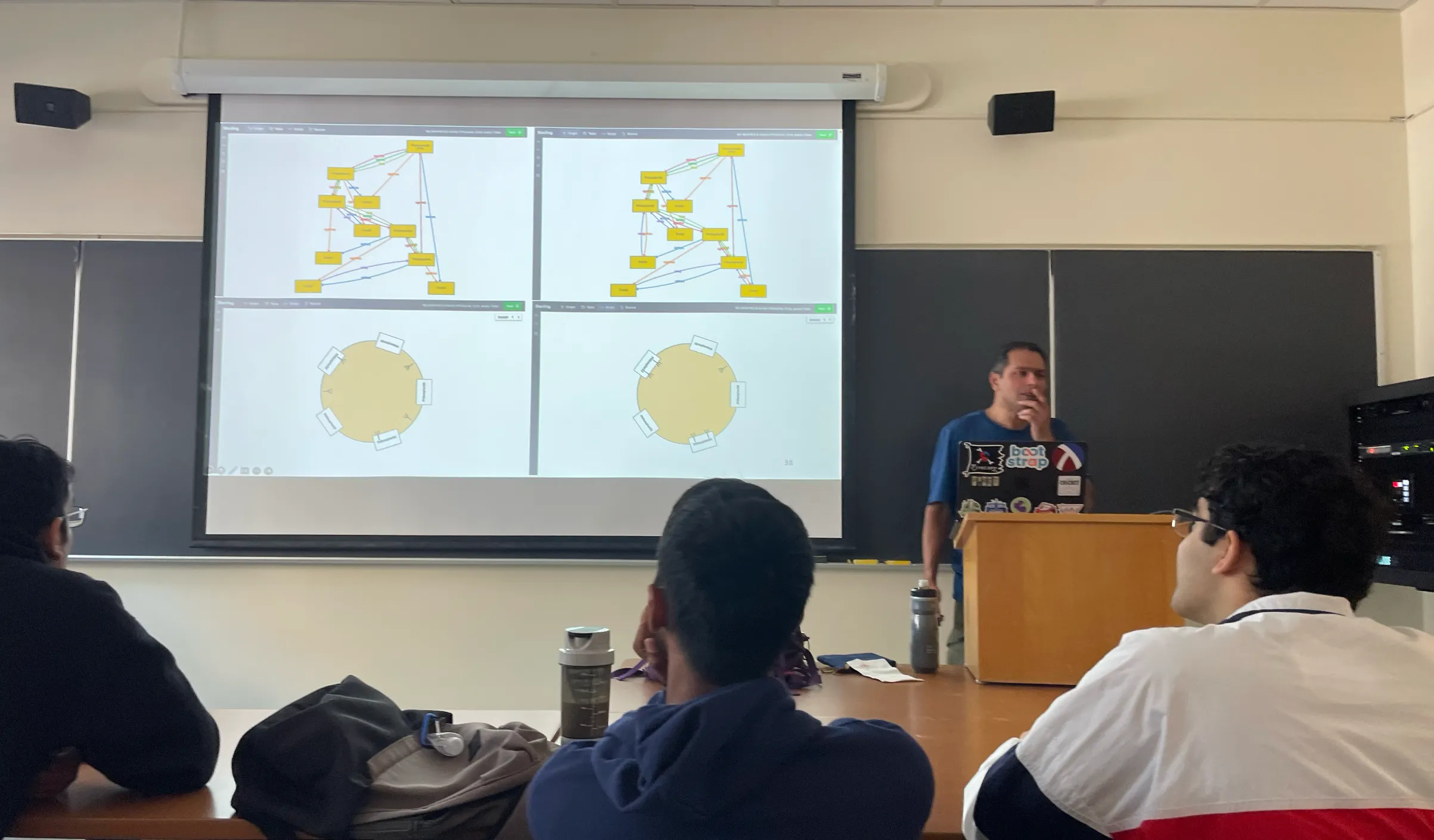
The key takeaway from this observation is the importance of bridging the gap between mathematical sophistication and user-friendly design. While mathematical rigor is essential for robust computation, effective communication requires consideration of diverse user perspectives and levels of understanding. Simply put, a visually appealing or theoretically elegant model may not serve its purpose if it fails to resonate with its intended audience.
#How to show
The ultimate aim of computation extends beyond mere processing of data; it encompasses the profound impact on users, invoking questions rooted in cognitive sciences such as perceptual and educational psychology. Recognizing that prior knowledge serves as a catalyst for empowered output, the challenge lies in effectively presenting computational results to optimize user understanding and engagement.
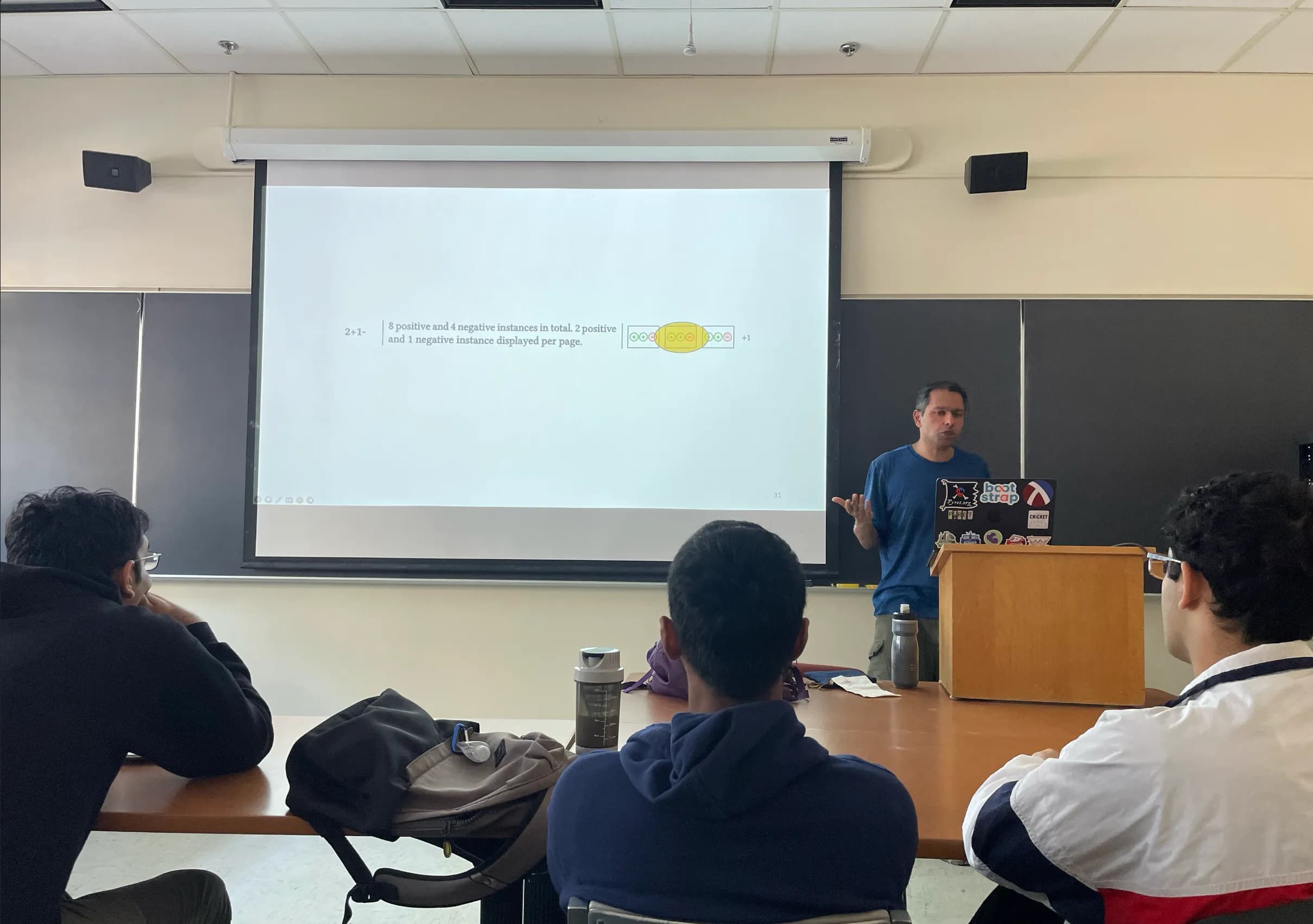
An illustrative example lies in applying cognitive principles to the output of model findings, particularly highlighting the positive value of negative information. Contrary to conventional wisdom, providing negative information can enhance learning—a phenomenon rooted in the principle of contrasting cases. By juxtaposing contrasting scenarios, users gain deeper insights and a more nuanced understanding of the subject matter.
The key takeaway from this approach is the recognition that as computer scientists, we possess insights into cognitive effects that can significantly enhance the effectiveness of computational output. By integrating principles from cognitive sciences into our computational models and presentations, we can create more impactful and user-friendly systems that resonate with users on a deeper level.
#What to show
Presenting visual representations and exploring avenues for improvement constitutes a vital aspect of effective communication and comprehension. When showcasing diagrams or visual aids, it's essential to solicit feedback on enhancing their clarity and impact. For instance, considering alternatives like silicon-shaped diagrams or dynamic motion animations can significantly enhance user understanding and engagement.
One notable tool facilitating such custom visualizations is Forge. By dynamically adjusting information based on user queries, Forge enables the creation of tailored visualizations that effectively convey complex concepts and data sets.
#Colored text test
Innovative approaches, such as color-text tests, draw inspiration from psychological phenomena like the Stroop effect, where color and text discrepancies create cognitive challenges, thereby deepening user engagement and comprehension.
Image by Gili Malinsky on Business Insider
#River-Crossing Puzzles (spatial and temporal)
Consider the example of River-Crossing Puzzles, which blend spatial and temporal elements to challenge problem-solving skills. In these puzzles, maneuvering pieces across a river involves understanding both spatial orientation (left, right) and temporal sequencing (before, after).
This interplay of spatial and temporal relations not only imbues meaning into the puzzle but also underscores the importance of metaphorical constructs in domain-specific contexts. Rust, a programming language known for its emphasis on memory safety and performance, leverages these spatial and temporal relationships to offer robust solutions, exemplifying the practical utility of such conceptual frameworks in computational domains.
#How to describe the system
Describing the intricacies of a system involves navigating through various formalisms and languages, such as Linear Temporal Logic (LTL), which provides a framework for reasoning about temporal properties in computational systems. Common operators in LTL include the following, each serving to express temporal relationships and constraints within the system.
- always
- eventually
- until
- next stage...
A seminal paper titled "Branching vs Linear Time" by Vardi et al. sheds light on the distinctions between branching and linear time logics, offering insights into their respective strengths and weaknesses in modeling and verification contexts.
One notable challenge lies in the transformation between LTL and natural language. While converting LTL formulas into English statements may seem straightforward, the reverse process—translating natural language requirements into LTL specifications—poses considerable difficulties. This complexity parallels the historical reliance on Latin terminology in medical contexts, where precise and standardized language facilitates communication despite its esoteric nature.
The key takeaway from this observation is the critical importance of rigorous verification in system design. As systems grow increasingly complex, ensuring their correctness and reliability becomes paramount. This necessitates the development of validated tools accessible to all stakeholders, facilitating seamless collaboration and verification processes.
#Conclusion and thought
Exploring the compiler side of coding offers a fascinating lens through which to examine abstract concepts from the perspective of cognitive science. Often, our understanding of fundamental concepts can be skewed by rigid interpretations ingrained in our educational frameworks. For instance, the notion of an acute triangle may seem straightforward, yet a simple rotation can confound our perception, revealing the limitations of our learned abstractions.

In a thought-provoking talk, Shriram Krishnamurthi, a distinguished professor at Brown University, highlights the peril of relying solely on concrete examples when explaining abstract concepts. The disconnect between abstraction and reality can lead to misconceptions and faulty generalizations. To mitigate this risk, Krishnamurthi advocates for a dynamic interplay between concrete examples and abstract principles—a process of constant iteration and refinement that fosters deeper understanding and guards against erroneous abstractions.
This iterative approach holds relevance not only in the realm of education but also in various fields, including software development. Rust, heralded for its emphasis on memory safety and avoidance of undefined behavior, exemplifies the benefits of this iterative mindset. The Rust Programming Language initiative at Brown University, spearheaded by Krishnamurthi, serves as a testament to the practical application of these principles in software engineering education.

What's Different About This Book? - The Rust Programming Language
For those venturing into Rust programming, Krishnamurthi recommends starting with the ownership page, a cornerstone of Rust's unique memory management system. By delving into compiler construction, one gains insights into not only the technical intricacies of coding but also the broader goal of facilitating learning and comprehension—an aspiration that resonates across disciplines and educational endeavors.